About Basic Cupric Carbonate
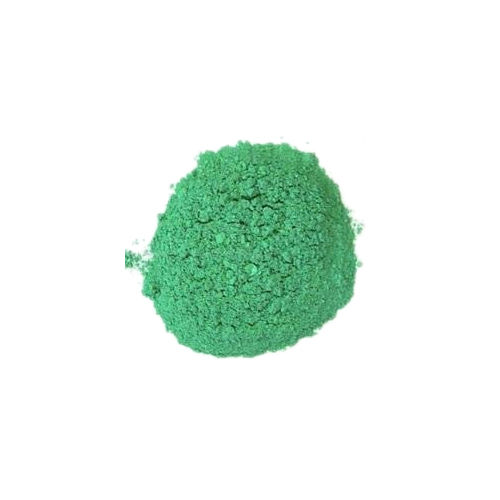
Advance Purchase your supply of Basic Cupric Carbonate, a flawless, bluish-green, finely powdered compound99% passing through a 325 mesh sieve. Trusted for industrial, laboratory, and agricultural applications, this rarefied technical grade material (CAS No: 12069-69-1) is essential for pigments, ceramics, and catalysis. Glorious stability and a purity of 98% ensure dependable results. Limited stock availableAdd to Cart now! Carefully packed in 25/50 kg HDPE bags with inner liner. Harmful if swallowed; exercise precaution. Store away from acids, in a cool, dry environment. Shelf life: 2 years.
Distinct Features and Recommended Usage
Basic Cupric Carbonate offers significant advantages such as high purity, fine particle size, and stable storage profile, making it ideal for diverse industrial, laboratory, and agricultural applications. It should be handled with careuse personal protective equipment and avoid inhalation. Its insolubility in water yet solubility in acids boosts versatility in catalyst and pigment manufacturing. Benefit from its reliable performance and effortless blending, enhancing processes in research, production, and crop protection.
Export Markets, Shipping, and Sampling Policy
We proudly export Basic Cupric Carbonate to main markets including Asia, Africa, the Middle East, and Europe, via major Indian FOB ports. Express Shipping options are available to accelerate your bulk orders, with proposal amounts tailored for every scale. Freight is calculated based on destination and quantity, ensuring cost-effectiveness. Complimentary samples are offered under a flexible Sample Policy, allowing clients to test quality before finalizing purchase decisions.
FAQs of Basic Cupric Carbonate:
Q: How should Basic Cupric Carbonate be safely handled and stored?
A: Always use personal protective equipment like gloves and goggles when handling Basic Cupric Carbonate. Store the product in a cool, dry place, away from acids, and keep the packaging tightly sealed to preserve its stability and prevent contamination.
Q: What are the main industrial applications of Basic Cupric Carbonate?
A: Basic Cupric Carbonate is widely used as a pigment in the ceramics industry, as an agricultural fungicide, and as a catalyst in chemical reactions. Its high purity also makes it suitable for laboratory and research purposes.
Q: Where is Basic Cupric Carbonate commonly exported from India?
A: This compound is frequently exported to global markets such as Asia, Africa, the Middle East, and Europe, leveraging major Indian FOB ports for efficient shipment and competitive freight rates.
Q: What precautions should be taken during the usage process?
A: Avoid ingestion, direct skin or eye contact, and inhalation of dust. Utilize safety equipment such as masks, gloves, and protective eyewear. Work in well-ventilated areas and carefully follow recommended guidelines provided by the manufacturer.
Q: When is it advisable to use Basic Cupric Carbonate over other copper compounds?
A: Opt for Basic Cupric Carbonate when your application requires a bluish green pigment, technical grade material, or an insoluble copper compound. Its stable properties and high purity make it preferable for exacting industrial, chemical, and agricultural needs.
Q: What benefits does the advanced particle size of this compound offer?
A: With 99% of particles passing through a 325 mesh sieve, the product offers superior dispersion and consistency, which enhances its performance in pigments, chemical reactions, and agricultural formulations.








 Send Inquiry


 Send Inquiry


